
The AirPods Effect
How earbuds influence our beliefs and push us apart.

A LITTLE TIME away can be clarifying. When you’ve had a break from a place, you’re able to see it with fresh eyes. You notice things that routine and familiarity had rendered invisible.
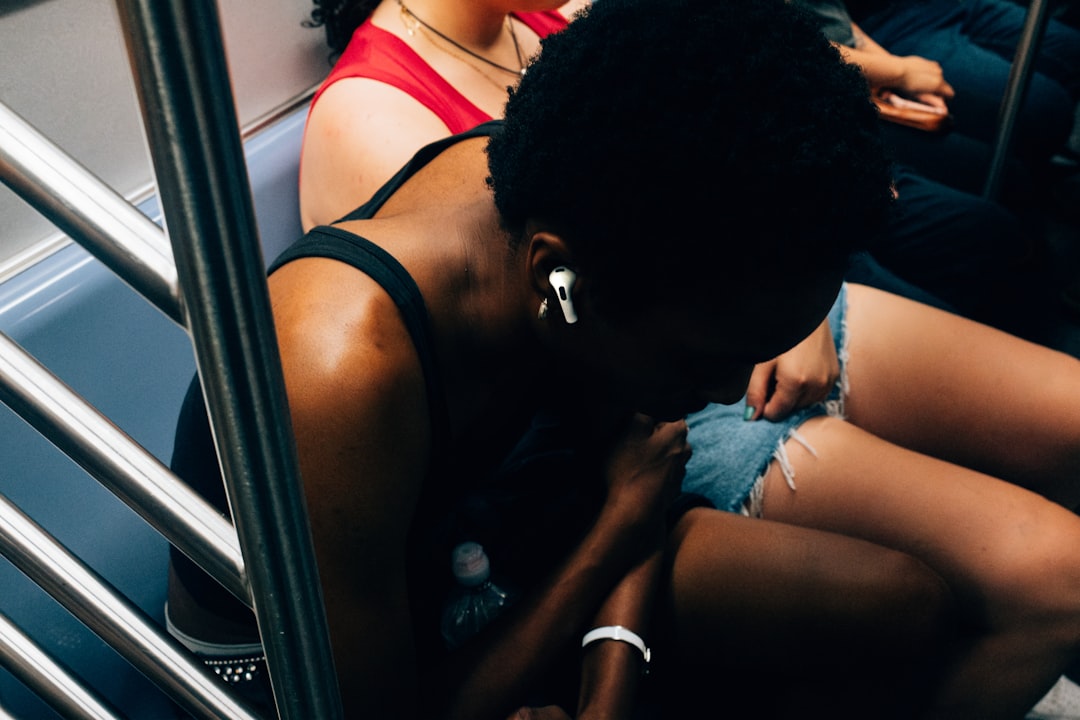
During my last trip home to the U.S., one of the things that jumped out at me was the number of people with AirPods in their ears.
Where I live, in southwest Germany, AirPods are far less common. It was jarring to see so many little white globules dripping out of the ears of those around me in coffee shops, in grocery stores, and pretty much everywhere else I went during my trip to suburban Detroit. Whether young or old, chic or grungy, athleisured or denimed, everyone seemed to be sporting some type of earphone.
Americans are speaking less and less to one another. The number of spoken words uttered by the average person fell by 28% between 2005 and 2019.
The popularity of AirPods is nothing new. But as the functionality of our tech-connected ear gear has improved — and as podcasts have exploded into one of the most consumed forms of media in America — earphones have assumed a bigger role in our daily lives.
By some market estimates, 44% of Americans use Bluetooth or wireless earphones, and an additional 24% use something wired. I couldn’t find good data on the percentage of people who regularly wear earphones as they go about their daily lives. But during my recent trips to Michigan and Florida, I felt like half the people around me in public had some kind of device-connected earwear on their head.
There is disappointingly little peer-reviewed research on the effects earphones have on our daily lives and interactions. But the evidence we do have suggests that while AirPods and similar technologies do some wonderful things for us, they also subtly influence our beliefs, reinforce our insecurities, and push us farther apart.
***
During the pre-smartphone era of iPods and other portable music devices, a small study of college students found that those who were heavy users of headphones experienced higher levels of social isolation and loneliness.
More than 15 years later, in 2021, a survey conducted by the audio technology company Jabra came to similar conclusions. Heavy headphone use makes people feel lonelier, the survey found. It also makes people less likely to have a meaningful conversation with someone new. Many of those interviewed for the survey said they wore headphones in part to avoid having to talk to other people.
This habit of using headphones to dodge uncomfortable interactions may be especially common among younger adults, for whom social unease and feelings of isolation are well-documented problems that have become more common in recent decades.
“I believe human interaction is fading, largely in part to the constant usage of AirPods or other forms of headphones,” wrote Eva Long, a student at Liberty University in Virginia, in a 2025 opinion piece for her school’s newspaper, The Liberty Champion.
“No one talks on the bus. No one greets the barista. Even in class, students are choosing to listen to music instead of their professors,” Long wrote. “When passing someone I know who has AirPods in their ears, it’s difficult to catch their attention unless we make direct eye contact. This lack of engagement is discouraging, and it makes spontaneous social connections less likely.”
Headphones “are a social crutch, granting us the ability to tune in or out of the world as we please,” wrote sophomore Katelyn Halverson in The Cornell Daily Sun. “Interpersonal interaction in public spaces has become more or less optional with the use of headphones — and it appears that the majority (myself included) have a sneaky tendency to opt out.”
Both of these college-paper think pieces were written in 2025, but I found a half-dozen others — some dating back to 2019. All of them bemoaned the fact that, thanks largely to headphones, the collegiate experience has become less social, less immersive, and less interactive. Basically, less collegial.
‘All these little conversations add up to us feeling like people are generally good, I can talk to anybody, and I have a place in this world. That’s something we all need.’
While earphone-assisted comfort bubbles are nothing new on campus — or for that matter, in coffee shops or on public transit — I see them bleeding into situations where, just a few years ago, they would never have occurred.
People now wear their AirPods all day at the office. They keep them in while ordering and paying for things in stores and supermarkets.
I played golf last summer at a public course in Michigan, and the guy I was paired with wore AirPods throughout our nine holes together. After shaking my hand and offering me a terse “play well,” the guy didn’t say five words to me for the rest of our round. I would have felt less isolated playing alone.
I know that a lot of people wear AirPods to facilitate communication, not to deter it. AirPods can function as hearing aids — blocking out background noise while helpfully amplifying the words of a conversation partner.
The problem is that unless you already know the AirPod wearer and you’re confident they won’t be bothered if you start chatting with them, earphones are the equivalent of a “Do Not Disturb” sign. We see them and assume the person wearing them is either listening to something or trying to block out distraction. To strike up a conversation with someone wearing earbuds feels intrusive — like you’re bulling your way into their personal space without permission.
I’m sure some people reading this will say, Well, so what? Small talk is a drag anyway, especially with strangers or loose acquaintances. As long as a person has close connections in their lives — people for whom they either take out their AirPods or use them to connect and communicate — then what’s the harm?
I used to feel this way myself, but I’ve learned some things that have changed my mind.
For a piece I wrote recently for Time magazine, I detailed the findings of a new study that found Americans are speaking to one another far less than they used to. According to that study, the number of spoken words uttered by the average person fell by 28% between 2005 and 2019. Each year during that time period, the number of words people spoke in an average day declined.
One of the authors of that study, the University of Arizona social psychologist Matthias Mehl, told me it’s highly likely that spoken communication has fallen further since 2019. He pointed to the loss of idle chitchat and other public-space interactions as significant contributors to the trend. “We can shop for groceries now without talking with a checkout person, and in restaurants we can sometimes order and pay without ever talking with a server,” he said. “All these ways in which we have rendered our daily lives more efficient may have also resulted in rendering our social lives more rudimentary.”
When people listened to podcast-style audio content through headphones, they perceived the podcaster to be warmer and friendlier, more persuasive, and more empathetic than if they listened to the same piece of content on speakers.
For that Time piece, I also spoke with Gillian Sandstrom, a psychologist at the University of Sussex and author of the new book Once Upon a Stranger.
Sandstrom told me that casual conversations with people we don’t know well can make us feel more connected to one another. These conversations also exercise and enhance our social skills. They may even bolster our faith in humanity. “When we have these interactions, they tend to go much better than we thought they would, and we come away from them with a sense that people are generally good,” she told me.
The more I’ve thought about what she told me, the more important her message feels.
For those of us who wear earbuds all the time, the people drifting by on the outside of our artificially quieted, personally curated sound silos can begin to resemble other vehicles on a traffic-choked interstate — that is, like little more than nuisances crowding our space and impeding our progress.
I think we need regular doses of real human contact — not just with close friends, but with acquaintances, and even with strangers — to counterbalance all the negativity we encounter in the news and online, and to remind us that, on the whole, people are kind and well-meaning.
***
Apart from throwing up roadblocks that prevent these sorts of casual interactions, earbuds may change our relationship to the content we consume.
For a study creepily (but aptly) titled “A Voice Inside My Head,” researchers at several University of California schools found that when people listened to podcast-style audio content through headphones, as opposed to via speakers, they tended to form a more positive impression of the person delivering the podcast. They perceived the podcaster to be warmer and friendlier, more persuasive, and more empathetic than if they listened to the same piece of content on speakers.
The explanation for this, according to the study’s authors, is that headphones may reduce the psychological distance between listener and speaker; headphones give listeners the sense that the speaker’s voice is coming from inside their head — almost as though the voice they’re hearing and their own internal thoughts are one and the same. “It is important to understand how the medium through which people listen can affect their perceptions, attitudes, and behaviors,” the study’s authors wrote. “We find consistent evidence that listening to a message via headphones (vs. speakers) leads listeners to feel closer to communicators, leading to different psychological and behavioral responses to messages.”
It’s possible that many of us are so taken with podcasts — and so amenable to the theories and opinions we encounter in them — in part because of these subtle perceptual and psychological effects. (As Marshall McLuhan famously put it, “the medium is the message.”)
While all these consequences are concerning, I think the greatest problem our earphones pose to us — and the one that led me, several years ago, to cut back my own use — is the way audio content can crowd out time we should properly spend with our own thoughts.
Back in 2019, I wrote a piece titled “Why Your Brain Needs Idle Time.” I detailed all the reasons we need to give our minds regular breaks from new information so that we have time to consider and make sense of our experiences.
“The deeper reflective states, where you make meaning of what’s going on and connect it to self and identity and integrate knowledge together into coherent narratives — these kinds of processes only happen when you’re not focused on some in-the-moment activity,” Mary Helen Immordino-Yang, a professor at the University of Southern California, told me for that piece.
These vital periods of contemplation and meaning making require us to step away from our various content streams and allow our thoughts to wander freely. But thanks to earbuds, such opportunities to rest and reflect are increasingly optional — and effortful.
***
During my last trip home to Detroit, I was filling a container at a grocery store salad bar when an older man, unprompted, pointed at the jalapeno slaw I was spooning up and said, “You’re going to eat that?”
He looked at me sideways, shaking his head and smiling. “Oh man, that looks too spicy for me. You’re going to have to tell me how it is. I don’t know about that!”
Living abroad, one of the many things I miss about the U.S. is the warmth and friendliness of its people. (In my experience, a German would never interact with a stranger the way this older man had interacted with me.) I told the man I’d be sure to let him know about the slaw, and he wished me a good day. The interaction lasted 15 seconds, but it brightened my whole afternoon.
The greatest benefit we get from chatting with other people — and the one we may ultimately miss the most if we spend less time talking with one another — is also the hardest to quantify, Sandstrom told me for that Time article.
“All these little conversations add up to us feeling like people are generally good, I can talk to anybody, and I have a place in this world,” she said. “That’s very hard to measure, but that’s something we all need.”
The more time we all spend with AirPods in our ears, the more that need is likely to go unmet.
Was the slaw super spicy?
Have you considered that not everyone wants to interact with you?
A lot of us use airpods to tune out unwelcome, distracting sounds. City living is rough on the brain, especially if you're neurodivergent.
The fact that it acts as a "do not disturb" sign is 100% upside. Why would you want to talk to people who would rather be left alone? Now they have a visible sign so you can avoid being rude and creating an awkward situation for you both.